
Garage Door Tune-Up and Fall Winterization in Minneapolis
A garage door tune-up in Minneapolis costs $75 to $150, takes about an hour, and covers spring balance, cold-rated lubrication, rollers, hinges, cables, track, the bottom seal and the opener's safety settings, with a written price first. Book it in October, before the first hard freeze, and most January emergencies never happen.
One tune-up a year is enough for most Twin Cities doors. A door that opens ten times a day, or a detached garage that never gets above freezing, does better with two. Call (651) 888-8270.
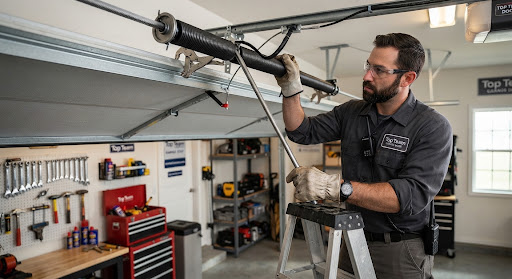
An hour in October saves a January morning
Balance, lubricate, tighten, seal, test, and a written note of what to watch.
What a Garage Door Tune-Up Includes
A tune-up is not a spray can and a handshake. It is the twelve checks below, done in order on every door, with anything that fails written up as a separate price you can accept or decline. Better to find a tired spring in October than in January.
- 01Balance test. Opener released, door lifted by hand. It should stay put at waist height; one that drops has spring trouble.
- 02Springs. Inspected for rust pitting, stretched coils and gaps, with a rough cycle count from the door's age and use. Adjusted where the door allows.
- 03Lift cables and drums. Checked for fraying, especially the bottom foot where salt collects, and for cable seated in the drum grooves.
- 04Bottom brackets and bearing plates. Inspected for rust scaling and looseness.
- 05Rollers and hinges. Bearings spun, stems checked, hinges inspected for cracks. Sealed nylon rollers quoted if the steel ones are done.
- 06Track and jamb brackets. Vertical track checked plumb, horizontal track checked for sag, lag bolts tightened.
- 07Lubrication. Springs, hinges, roller bearings and bearing plates get silicone that stays thin below zero. The track is wiped clean, not greased.
- 08Bottom seal and weatherstripping. Checked for cracks, flattening and daylight.
- 09Opener force and travel limits. Set so the door closes fully without slamming and reverses on light resistance, which matters when the seal freezes.
- 10Photo-eyes and reversal test. Sensors aligned and cleaned, then the door is closed onto a block to confirm it reverses.
- 11Opener drive and hardware. Chain or belt tension, gear and sprocket wear, rail and header bolts, strut and top bracket fasteners, battery backup if fitted.
- 12Remotes, keypad and wall console. Batteries and buttons tested, then a written summary of what we found.
Balance and Springs
A door out of balance makes the opener do the springs' job, which is how a tune-up finding becomes a $250 gear kit. We set the balance and tell you how many winters the springs have left.
Lubrication That Works Below Zero
Silicone on the springs, hinges and bearings, never WD-40, which strips the grease out and leaves the parts dry by December.
Seals and Weatherstripping
The bottom bulb seal is what freezes to the slab. A cracked or flattened one is replaced before the first freeze, and side and top weatherstripping checked for gaps that let in drafts and mice.
Opener Safety Settings
Force and travel limits reset, photo-eyes aligned, reversal tested. The setting that lets the opener give up on a frozen seal instead of tearing it off is worth the visit alone.
Signs Your Garage Door Is Due for a Tune-Up
Once a year is the rule. These five mean the year is up early.
Louder Than Last Year
Squeaks at the hinges, a rattle at the top of travel, a grind at the curve. Dry bearings and loose hardware announce themselves.
Hesitates or Jerks at the Curve
A door that pauses where the vertical track meets the horizontal has rollers or track alignment on the way out.
Opener Strains or Reverses Sometimes
An intermittent reverse on the way down is a force limit, a frozen seal or a photo-eye about to fail.
Daylight Under or Beside the Door
A flattened bottom seal or shrunken side weatherstripping. In Minnesota that gap is the ice sheet on your slab by January and the mouse door to your garage.
It Is October and Nobody Has Looked at the Door
Most Twin Cities garage doors have never had a tune-up. A builder-grade door in Maple Grove or Woodbury from the 2000s is now 20 years old, with its original steel rollers, springs and seal. One visit before the freeze tells you which of those lets go this winter.
Lubricate what you like; do not adjust the springs. Homeowners can safely spray silicone on hinges and rollers and wipe down the track. Winding torsion springs and touching the bottom brackets is a different job; the tension in them lifts a 200-pound door. Leave those two to the technician.
What Fall Winterization Means on a Twin Cities Door
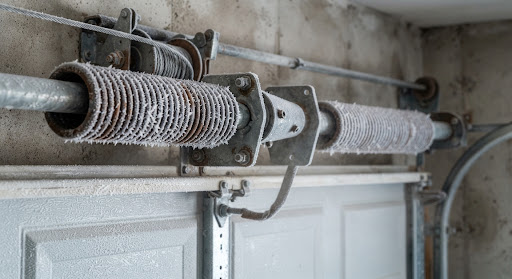
Winter attacks a garage door in four places. Spring steel gets brittle below zero, so a spring at the end of its cycle life breaks on the first cold morning. The bottom gasket freezes to the concrete and the opener either tears it or reverses. Grease thickens in the roller bearings and the opener gearbox until the motor strains. And salt off the tires rusts the lift cables and bottom brackets from the ground up.
A fall tune-up addresses each one: springs inspected before the brittle season, a cold-rated seal that stays flexible on frozen concrete, silicone that stays thin at 20 below, and cables and brackets checked where the slush collects. Our guide on how to winterize a garage door in Minnesota covers the part you can do yourself; the cold-weather troubleshooting guide covers what happens if you skip it.
Ask About a Maintenance Plan
For homeowners who would rather not think about the garage door: a standing tune-up each fall (or spring and fall for busy doors and detached garages), a call from us in September to schedule it, and any repair the visit turns up quoted in writing before we do it. Ask for the details when you call.
Tune-Up and Winterization Costs
Typical Minneapolis ranges from our September 2026 pricing research. The tune-up price covers the twelve checks and the lubrication; parts that turn out to be needed are quoted separately in writing. The Minneapolis repair cost breakdown lists what those add-ons usually run.
| Service | Typical Time on Site | Typical Range (Written Quote First) | What's Included |
|---|---|---|---|
| Annual Tune-Up and Winterization Most Common Single or double residential door | About an hour | $75 to $150 | All twelve checks, cold-rated lubrication, balance and safety tests, written summary. |
| Tune-Up With Nylon Roller Upgrade Ten sealed rollers fitted during the visit | About 90 minutes | $75 to $150 plus parts | Tune-up plus a full roller set; a roller job on its own typically runs $120 to $250 (see the roller page). |
| Bottom Seal Replacement Added Cold-rated bulb seal and retainer | Adds 20 to 30 minutes | $85 to $200 | New seal sized to the door, retainer replaced if needed. |
| Spring Found at End of Life Replaced during the same visit if you approve | Adds about an hour | $143 to $333 a spring | Spring sized to the door, rebalanced, opener reset; see spring repair. |
Symptom, Cause and Fix
What a Tune-Up Often Leads To
Tune-Ups Across the Twin Cities
Tune-Up and Maintenance FAQs
Book Before the First Freeze
About an hour on site, written summary when we leave.
Tune-ups are paid when the visit is done. If the tune-up finds a door that is rusted through or costing you heat, financing is available on new doors.
See financing optionsRead Our Tune-Up and Repair Reviews on Google
Get the door ready for winter in one visit, for $75 to $150 you see before we start.
Tune-ups and winterization across the Twin Cities, 7 AM to 11 PM daily.