Winterizing a garage door takes about an hour in October: lubricate the moving parts with silicone, tighten the hardware, test the balance and safety reverse, and inspect the bottom seal and weatherstripping. Done as a professional tune-up in Minneapolis it typically costs $75 to $150, and it prevents most of the January breakdowns we see.
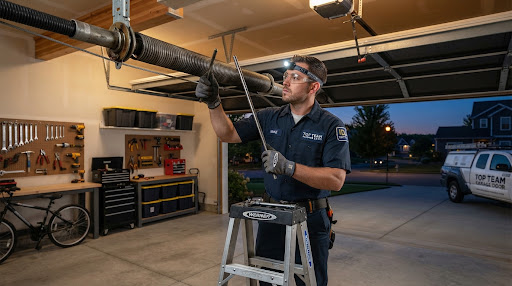
The one thing you should never adjust yourself is spring tension. If the balance test in section two fails, that is a call to a technician, not a wrench job.
October is the month: warm enough to work with bare hands, early enough that nothing has frozen or snapped yet.
An hour of fall maintenance is the cheapest garage door work you will ever buy.
Why Winterizing Matters More in Minnesota
A garage door in Phoenix gets to age gracefully. A garage door in the Twin Cities gets 40-degree temperature swings, months of subzero mornings, road salt spray on its cables and bottom brackets, and ice at its feet. Cold makes spring steel brittle, thickens the grease in the opener rail, shrinks steel tracks just enough to bind marginal rollers, and freezes wet bottom seals to the slab.
That is why garage door companies here are busiest during the first hard freeze: every weak part that limped through summer fails in the same week. The whole point of winterizing is to find those parts in October, when fixing them is cheap and the garage is not twenty below.
The Fall Checklist, in Order
Here is the same sequence we run on a paid tune-up visit, minus the spring work. Budget an hour with the door closed and the car out of the garage.
Lubricate rollers, hinges and springs
Use silicone or a garage-door-specific lube, not a degreaser. Hit the roller bearings, every hinge pivot, the spring coils and the opener rail. Wipe the tracks clean but do not grease them; rollers ride tracks dry.
Tighten the hardware
A door cycles more than a thousand times a year and vibration backs bolts out. Snug the track brackets, hinge screws and the opener rail hangers with a socket wrench. Snug, not gorilla tight.
Run the balance test
Pull the red release cord and lift the door halfway by hand. It should stay put. If it drifts down hard or flies up, spring tension is off, and that is a technician's job.
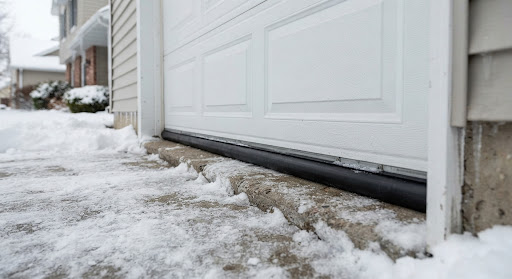
Inspect the bottom seal
Look for cracks, flat spots and gaps you can see daylight through. Hard, cracked rubber is what freezes to the slab in January. Replacement runs $85 to $200 installed.
Check the weatherstripping around the frame
The vinyl stop molding on the sides and top should touch the door lightly along its full length. Torn or shrunken molding leaks heat and lets snow drift in.
Test the photo eyes and safety reverse
Clean both sensor lenses and confirm the door reverses on a 2x4 laid flat under it. A door that will not reverse is a hazard, cold weather or not.
Seals, Drafts and the Insulation Question
Winterizing the mechanism keeps the door working. Winterizing the opening keeps the garage livable, and in an attached garage it shows up on the heating bill for the rooms above and beside it.
If your door is an older uninsulated panel, the upgrade premium for an insulated model typically runs $400 to $1,200 and pays for itself in 2 to 4 years on an attached garage. Our insulated garage door page covers construction types and R-values in detail.
Want it done before the first cold snap?
Fall tune-ups book fast from late September on. Call 7 AM to 11 PM and we will tell you the scheduling window, with the price in writing first.
What Winterizing Costs: DIY vs Pro
Typical Minneapolis numbers, written quote first on anything we do:
| Item | DIY cost | Professional cost | How often |
|---|---|---|---|
| Silicone lube and a Saturday hour | About $10 | Included in tune-up | Every fall |
| Full tune-up and winterization | Your time | $75 to $150 | Every fall |
| Bottom seal replacement | $30 to $60 in parts | $85 to $200 installed | Every 3 to 5 winters |
| Frame weatherstripping | $20 to $40 in parts | Often bundled with seal work | As it cracks |
| Insulated door upgrade premium | Not a DIY job | $400 to $1,200 over a basic door | Once |
When to Winterize, and What We Catch That You Cannot
Do the DIY list in October, before overnight lows go below freezing. Lubricant spreads better on warm metal, weatherstripping installs straighter when the vinyl is soft, and anything you find broken can be fixed on a comfortable afternoon instead of an emergency morning. If you missed October, do it anyway. November maintenance still beats no maintenance.
On the professional side, a technician measures things a homeowner cannot: whether the springs still match the door weight, how many usable cycles the wire likely has left, whether the lift cables are rusting at the bottom brackets where salt water sits, and whether the opener force limits are set right for a stiff winter door. We run tune-ups across the whole metro, from Maple Grove to Woodbury, on LiftMaster, Chamberlain, Genie and every common brand of door, including Clopay and Amarr panels. Book a fall visit and go into January with nothing to worry about above the car.
Winterizing FAQ
David Gordon
Owner, Top Team Garage DoorDavid Gordon founded Top Team Garage Door in 2017 and spends every fall running winterization visits across Minneapolis, St. Paul and the metro. The company is licensed by the City of Minneapolis, bonded and insured, and quotes every job in writing before work starts.