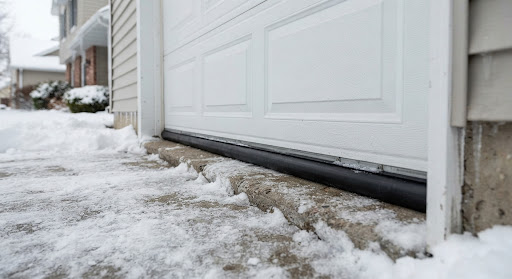
A standard garage door spring is rated for about 10,000 open and close cycles. For a family using the door four times a day, that is roughly 7 years; lighter use stretches it past 10. Minnesota's cold and road salt push real world life toward the short end of those numbers.
Springs age by cycles, not by calendar. The same spring lasts 14 years on a snowbird's door and 5 on a door that doubles as the family front entrance. Count your daily door uses before you trust any average.
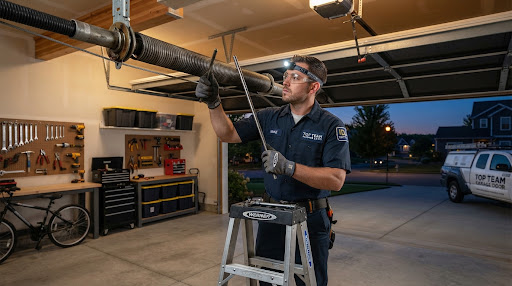
Every open and close winds and unwinds the coil once. The steel keeps an honest count even when nobody else does.
A spring's rated life is set by its wire size, inside diameter and length. Bigger wire on the same door means more cycles, which is the whole idea behind high cycle upgrades.
The Cycle Math: Years Are Just Cycles Divided by Habits
One cycle is one full open and close. A standard builder grade torsion or extension spring is engineered for about 10,000 of them. How fast a household burns through 10,000 cycles varies more than most people expect, especially in suburbs like Woodbury and Maple Grove where the garage door is effectively the front door.
| Daily door uses | Cycles per year | 10,000 cycle spring | 25,000 cycle spring |
|---|---|---|---|
| 2 (single commuter) | About 730 | 13 to 14 years | 30+ years |
| 4 (typical family) | About 1,500 | 6 to 7 years | 16 to 17 years |
| 6 (busy household) | About 2,200 | 4 to 5 years | 11 years |
| 8+ (door as front door) | 3,000 and up | 3 to 4 years | 8+ years |
What Minnesota Weather Does to Spring Life
The cycle rating assumes a spring working in reasonable conditions. An unheated garage in Blaine in January is not reasonable conditions, and three things chip away at the rating.
First, cold embrittlement. Spring steel loses ductility as temperatures fall, so the microscopic fatigue cracks every spring accumulates grow faster under load when the coil is stiff with cold. This is why broken spring calls cluster on the first hard freeze each year and again in the depths of January: the crack that would have held on a mild morning lets go on a brutal one, usually on the day's first cycle. Second, rust. Salt spray dripping off cars and humid freeze thaw air pit the wire surface, and every pit is a crack starter; the springs, cables and bottom brackets in a Minnesota garage rust years ahead of the same parts in Arizona. Third, dry friction. Cold thickens and eventually strips lubrication, so the coils rub steel on steel each cycle and the door's balance drifts, forcing the springs to work harder than their spec.
Net effect: we treat 10,000 rated cycles in an unheated Twin Cities garage as the ceiling, not the promise. The far end of the table above belongs to heated, attached, maintained garages.
A balance test tells you where you stand
Ten minutes with the door on the emergency release tells a technician whether your springs have another winter in them. We put the finding and any quote in writing.
How to Actually Stretch Spring Life
You cannot add cycles to the rating, but you can stop wasting them and slow the corrosion clock. All of this is cheap next to a snapped spring in February.
That last item is the highest leverage one in this climate: a tune-up runs $75 to $150 and is exactly the visit that catches a fatigued spring in October instead of on a below zero morning.
Warning Signs, and When to Replace Proactively
Springs rarely die silently. In the months before a break we typically see a door that feels heavy on the emergency release, an opener that strains or needs a force adjustment, a door that sags to one side, stretched gaps between coils, or rust bloom on the wire. Any of those on springs past the 7 year mark is the door asking for a spring service visit on your schedule instead of its own.
Two honest upgrade notes. If one spring on a two spring door breaks, replace both: the survivor has identical mileage, and our broken spring guide explains why that saves money. And if you are replacing anyway, ask about high cycle springs: a 25,000 cycle set on the same door typically costs a modest premium over standard and, per the table above, can be the last set a busy family buys for a long time. Replacement runs $143 to $333 apiece in the metro; the full price breakdown lives in our spring cost guide, and a written quote is always available through the contact page.
Spring Lifespan FAQ
David Gordon
Owner, Top Team Garage DoorSince founding Top Team Garage Door in 2017, David Gordon has repaired and installed garage doors and openers across Minneapolis, St. Paul and the surrounding metro. He publishes these guides so homeowners can judge a fair price and a sound repair before they pick up the phone, even to us.