Look above the closed door. One or two fat springs on a horizontal shaft directly over the opening means torsion springs. Two long skinny springs stretched along the horizontal tracks means extension springs. In Minneapolis, replacement runs $143 to $333 for the spring either way.
Both types store enough energy to lift a door that can weigh 150 to 300 pounds. Neither is a DIY replacement. This guide is about identifying what you have and knowing what a fair repair looks like, not about winding springs yourself.
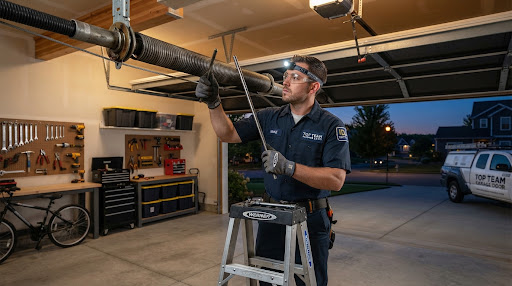
Torsion springs are wound with solid steel bars, never adjusted by hand. The coil twists around a shaft to lift the door through cables and drums.
A torsion spring sits on a shaft above the door and turns cable drums at each end. This is the system on most doors built since the 1990s.
How to Tell Which System You Have
Stand inside the garage with the door closed and look up. The two systems live in different places, so identification takes seconds.
Torsion springs
One or two heavy coils on a steel shaft mounted on the header wall directly above the door opening. Cables run from drums at the ends of the shaft down to brackets at the bottom corners of the door. Standard on most doors installed since the 1990s, and on nearly every 16x7 double door.
Extension springs
Two long, thin springs stretched above the horizontal tracks on each side, parallel to the ceiling. They stretch as the door closes and contract to help it rise, with pulleys and cables at each end. Common on older single garages and 9x7 doors, especially in prewar Minneapolis and St. Paul neighborhoods.
How Each System Actually Lifts the Door
A torsion spring works by twisting. As the door closes, cables wound on the drums rotate the shaft and wind the spring tighter, storing energy. Open the door and the spring unwinds, turning the drums and reeling the cables in, which carries most of the door's weight. Because the force feeds through drums at both ends of one shaft, the door lifts evenly and stays level.
Extension springs work by stretching. Each side has its own spring doing its own lifting through its own pulley and cable. That independence is the weakness: as the two springs age at different rates, the door starts lifting crooked, which wears rollers, strains hinges and can pull a cable off its pulley. When we get an off-track call on an older single car garage, an out of balance extension setup is a frequent cause. Our off-track guide covers what that failure looks like.
Cycle rating matters for both. A standard builder grade spring is rated around 10,000 cycles, one cycle being one open and close. High cycle torsion springs rated 25,000 cycles or more are available for a modest premium and make sense for busy households. Our guide on Minnesota spring lifespan guide does the math on cycles per year.
Torsion vs Extension, Side by Side
Neither system is wrong, but they are not equals. Here is how they compare on the points that matter to a homeowner. Prices are typical Minneapolis ranges, written quote first.
| Factor | Torsion | Extension |
|---|---|---|
| Location | On a shaft above the door opening | Stretched above the horizontal tracks |
| Lift quality | Even, level, smooth | Can lift crooked as springs age unevenly |
| Replacement cost per spring | $143 to $333 | $143 to $333, usually replaced in pairs |
| Typical rated life | 10,000 cycles standard, 25,000+ available | Around 10,000 cycles |
| Failure behavior | Coil separates on the shaft, stays contained | Can whip if the safety cable is missing |
| Space needed | Headroom above the door | Works with low headroom garages |
| Common on | Doors from the 1990s onward, double doors | Older single garages, alley garages |
Torsion or extension, we carry both
Our trucks stock common torsion sizes and extension pairs for Twin Cities doors, and you get the written price before any winding bar comes out.
Should You Convert Extension to Torsion?
When an extension spring fails on an older door, you have two options: replace the pair in kind, or convert the door to a torsion setup. We quote both and let the door decide. Conversion needs about 12 inches of headroom above the opening for the shaft, which rules out some low ceiling alley garages in St. Paul and south Minneapolis.
If the door itself is on the fence, our repair or replace breakdown walks through that decision honestly. And whatever you choose, get it in writing: our spring repair service quotes the full price, springs, labor and balance check, before work starts.
What Minnesota Winters Do to Both Types
Spring steel gets less forgiving as the temperature falls. Cold makes the metal more brittle, so a coil that has been quietly fatiguing all year tends to let go on the first hard cold morning, usually when the door is asked to move at 7 AM. It happens to torsion and extension springs alike, which is why our spring calls spike every year when the first real cold snap hits Hennepin and Ramsey counties.
You cannot stop steel from aging, but a fall $75 to $150 tune-up helps it age gracefully: cold rated lubricant on the coils, a balance test that catches a tired spring before it snaps, and a look at the cables, drums, rollers and bearings that share the load. Homeowners in Minneapolis with unheated detached garages get the most out of this, since their springs see the full force of every cold snap. If you want a technician to identify your setup and check its health, book a visit and we will put the findings in writing.
Spring System FAQ
David Gordon
Owner, Top Team Garage DoorTop Team Garage Door has been David Gordon's company since 2017, built on door and opener work across Minneapolis, St. Paul and the metro around them. The point of these guides is simple: a homeowner who knows what a fair price and a proper repair look like before calling anyone, including us.