For most Twin Cities homes, a belt drive is the best value: nearly as cheap as chain, far quieter, and durable in the cold. Chain wins on price and brute strength, wall-mount jackshaft wins on quiet and space. Opener installation in Minneapolis typically runs $315 to $452, with the full spread $109 to $771 by unit.
Screw drive and direct drive units exist too, and we service them, but the three types above cover nearly everything sold in Minnesota today from LiftMaster, Chamberlain and Genie.
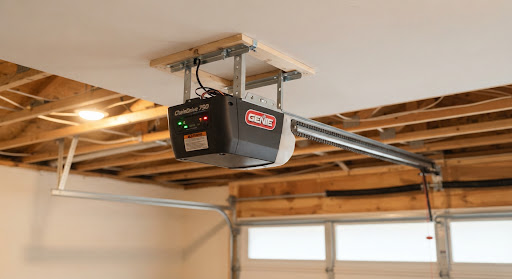
Chain and belt drives share this layout: a motor head on the ceiling driving a trolley along a rail. Only the loop that moves the trolley differs.
The drive type decides the noise, the price and the maintenance. The layout, the safety gear and the smart features are largely shared.
The Three Drive Types, Honestly Described
All three do the same job: move a properly balanced door that the springs are already carrying. Where they differ is how they transmit the force, and everything a homeowner cares about flows from that.
Chain drive: the workhorse
A metal chain drags the trolley along the rail, like a bicycle chain on its side. Cheapest to buy, hardest to kill, and the loudest of the three: a metallic rattle that rooms above the garage learn to recognize. The chain also wants occasional lubrication and a tension check, especially after big temperature swings.
Belt drive: the quiet default
Same layout, but a steel reinforced rubber belt replaces the chain. The result is dramatically quieter, smooth enough that the most common comment after an install is that the owner cannot hear the door from the kitchen. Modern belts handle Minnesota cold well and need almost no maintenance. The price premium over chain has shrunk to modest.
Wall-mount jackshaft: the premium option
No rail at all. The unit bolts beside the door and turns the torsion shaft directly. It frees the ceiling for storage or a car lift, is the quietest of the three, and suits high or cathedral ceilings where a rail is awkward. It costs the most and requires a torsion spring door with room beside the opening.
Side by Side, with Minneapolis Prices
Installed prices below are what we actually see across the metro, unit plus labor, as typical ranges with the written quote first. The $315 to $452 band covers most chain and belt installs; wall-mount units land at the top of the full range.
| Factor | Chain drive | Belt drive | Wall-mount jackshaft |
|---|---|---|---|
| Noise | Loudest, metallic rattle | Quiet hum | Quietest |
| Typical installed price | $315 to $400 | $350 to $452 | $550 to $771 |
| Durability | Excellent, decades with lube | Excellent, low maintenance | Excellent, few wear parts |
| Cold weather behavior | Chain slack shifts with temperature | Very stable | Very stable |
| Best for | Detached garages, heavy doors, budgets | Attached garages, bedrooms above | High ceilings, storage overhead |
| Battery backup and Wi-Fi | Available on most units | Available on most units | Standard on most units |
Same-day opener replacement, most days
Tell us your door size and ceiling situation and we will recommend a unit and quote it in writing, installed, before we come out.
Which One Fits Your Garage and Your House
The right answer usually falls out of three questions: what is above the garage, what hangs from the ceiling, and how cold does the garage run.
Rooms above or beside the garage
Belt drive, no hesitation. In the attached garages of Woodbury and Lakeville subdivisions, the difference between a chain rattle and a belt hum at 6 AM is the difference between waking the house and not. A DC motor with soft start and stop makes it quieter still.
Detached, unheated, or a workshop
Chain drive earns its keep: cheap, tough, indifferent to abuse. For alley garages in Minneapolis and St. Paul it is the sensible pick. Going wall-mount to clear the ceiling for storage racks or a car lift is the upgrade path if the garage has a torsion spring door.
Two features we recommend regardless of drive type in Minnesota: battery backup, because metro outages cluster around exactly the summer storms and winter ice events when you most need the door to open, and a MyQ or comparable Wi-Fi module, mostly for the closed-door confirmation on your phone. Our smart opener upgrade service can also retrofit Wi-Fi onto many existing units.
How Each Type Handles a Minnesota Winter
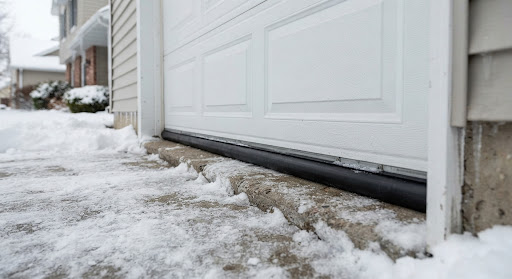
Cold is the honest test of an opener. Grease thickens, metal contracts, and marginal parts quit on the first below zero morning. Chain drives feel it most visibly: chain tension changes with temperature, and a chain set loose in July can slap the rail in January. Belts stay dimensionally stable, and wall-mount units, with the fewest moving parts in the load path, barely notice.
Whichever you own, winter opener complaints are often not the opener at all: a door frozen to the slab, stiff rollers, or a weakening spring makes any motor look bad. If the unit strains or reverses in the cold, run through our opener diagnosis guide before condemning it, and consider a fall garage door tune-up so the door gives the motor a fair fight. When it really is the unit, our opener service repairs what is worth repairing and quotes replacement in writing when it is not, and you can book either online.
Opener Buying FAQ
David Gordon
Owner, Top Team Garage DoorSince founding Top Team Garage Door in 2017, David Gordon has repaired and installed garage doors and openers across Minneapolis, St. Paul and the surrounding metro. He publishes these guides so homeowners can judge a fair price and a sound repair before they pick up the phone, even to us.